The History of Tea in China and Japan
The history of tea is often described as a long process of cultivation, trade, and cultural adaptation rather than a single event. Originating in the regions that now form southwestern China, tea moved gradually across landscapes, languages, and social classes over many centuries. Its journey from a local botanical resource to a central element of ceremony and daily life reflects broader patterns of exchange between China and Japan, as well as the influence of religious institutions and courtly customs on how tea was prepared and consumed.
Understanding this development requires attention to method and context. The ways tea was processed, brewed, and served changed according to available technology, philosophical frameworks, and social expectations. Religious communities, especially Buddhist monasteries, played a significant role in formalizing preparation methods, while imperial courts contributed structure, etiquette, and aesthetic sensibilities. Over time, these influences produced recognizable ceremonial styles that remain studied and practiced today.
This article outlines the principal stages in the spread of tea from China to Japan and examines how religious and court traditions shaped distinct ceremonial approaches. It focuses on documented practices, historical transmission, and cultural interpretation, while acknowledging that many details remain subject to scholarly discussion and regional variation.
Early Cultivation and Use of Tea in China
Tea appears in Chinese records in forms that suggest both medicinal and culinary use before it became a widely consumed beverage. Early references describe infusions made from leaves that were processed differently from modern methods, often pressed into cakes or used in combination with other ingredients. These practices developed within specific regional contexts, and their spread was gradual rather than uniform across the territory. The plant’s cultivation required particular climate and soil conditions, which contributed to the development of specialized growing areas over time.
During the Tang and Song periods, tea preparation and appreciation became increasingly refined and associated with literary and scholarly circles. Methods of processing and brewing were documented in treatises that described not only technique but also aesthetic and philosophical dimensions. The act of preparing tea began to be associated with qualities such as attentiveness, restraint, and harmony with one’s surroundings. These associations were not merely decorative; they reflected broader cultural values concerning discipline, hospitality, and the relationship between the individual and the natural world.
Parallel to these developments, tea became an object of trade and taxation, which encouraged standardized production and distribution. The movement of tea across regions facilitated the exchange of preparation techniques and social customs. Merchants, monks, and officials traveling between areas carried knowledge about tea, contributing to a gradual convergence of practices while still allowing for local variation.
Transmission to Japan and Early Monastic Practice
The arrival of tea in Japan is often associated with the activities of Buddhist monks who traveled to China for study and returned with both religious texts and cultural practices. These exchanges, which occurred across several centuries, introduced tea seeds and preparation methods to Japanese monasteries. Early use was closely tied to religious contexts, where tea was valued for its role in supporting meditation and communal life. The preparation and serving of tea became a structured activity that emphasized presence, order, and mutual respect among participants.
Within monastic settings, the methods for preparing tea were influenced by Chinese practices but were also adapted to local conditions and sensibilities. The availability of materials, the architecture of temple spaces, and the rhythm of religious observances all shaped how tea was served. Over time, these adaptations produced forms of practice that were recognizably distinct from their continental counterparts. The ceremonial dimension of tea in monasteries was not separate from everyday religious life but was integrated into it, serving both practical and symbolic functions.
As monastic communities interacted with lay society, elements of tea practice began to circulate beyond religious contexts. Lay patrons and local elites adopted aspects of tea preparation and presentation, which contributed to a gradual broadening of participation. This process was not immediate or uniform, and different regions developed their own interpretations of what constituted proper practice. Nevertheless, the monastic foundation established a framework of method and etiquette that would later influence formal ceremonial traditions.
Court Traditions and the Development of Ceremonial Style
Within Chinese imperial and aristocratic circles, tea became part of formal hospitality and diplomatic exchange. Court ceremonies required procedures that reflected hierarchy, propriety, and aesthetic refinement. The preparation and offering of tea were integrated into broader systems of etiquette that governed interactions between rulers, officials, and guests. These contexts emphasized precise handling, appropriate vessels, and a considered sequence of actions. The ceremonial use of tea in court settings differed from monastic practice in its emphasis on display and social positioning, although both drew on shared techniques.
In Japan, court and warrior elite traditions also shaped the development of tea practice. Elite households adapted monastic methods while introducing new elements related to hospitality and artistic appreciation. The role of the host became increasingly defined, involving careful selection of utensils and deliberate attention to the setting. These developments contributed to the emergence of a structured format for serving tea that would later be formalized by influential practitioners. The courtly influence introduced a concern for spatial arrangement, seasonal awareness, and the symbolic meaning of objects used in preparation.
The interaction between religious and court traditions was not one-directional. Monastic communities sometimes adopted refinements from elite practice, while court circles drew on religious frameworks for legitimacy and depth. This mutual influence produced a complex history in which ceremony was shaped by multiple social and institutional forces, each leaving distinct traces on method and interpretation.
Formalization and Divergence of Ceremonial Practices
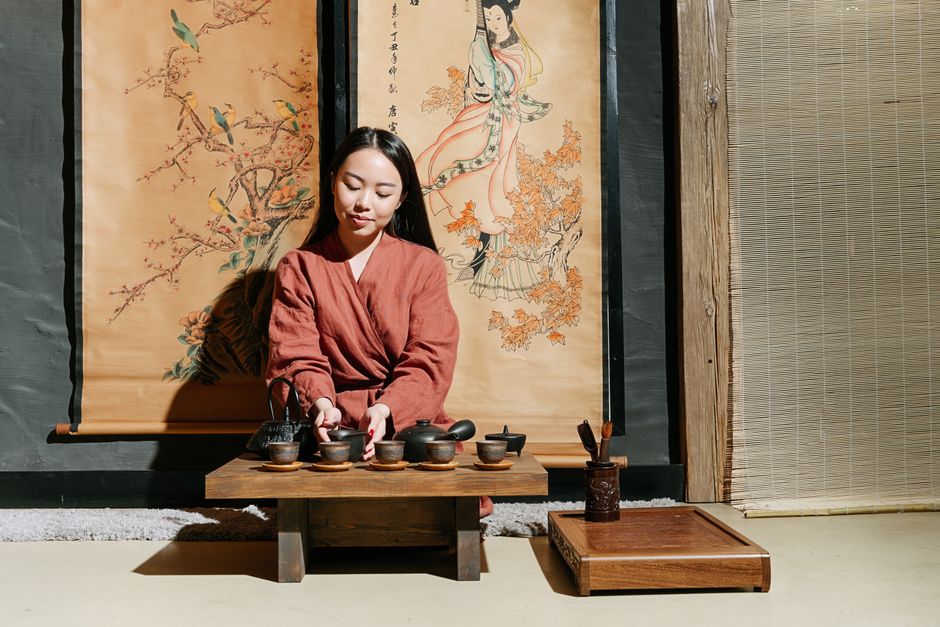
As tea practice continued to develop, influential figures systematized methods and articulated underlying principles. In Japan, the codification of tea ceremony involved the integration of architectural design, garden aesthetics, gesture, and utensil selection into a coherent framework. Practitioners emphasized documented procedures and transmitted knowledge through structured instruction. The result was a recognizable ceremonial style that could be taught, practiced, and refined over generations. This formalization also encouraged the development of distinct schools and lineages, each with its own emphasis and interpretations.
- The role of the host and guest was defined through detailed etiquette that governed speech, movement, and timing.
- Utensil selection became a considered practice, with attention to material, craftsmanship, provenance, and seasonal suitability.
- Spaces for tea practice were designed to create a controlled environment that supported focus and interaction.
- Transmission of knowledge occurred through apprenticeship and structured study, preserving methods while allowing for gradual innovation.
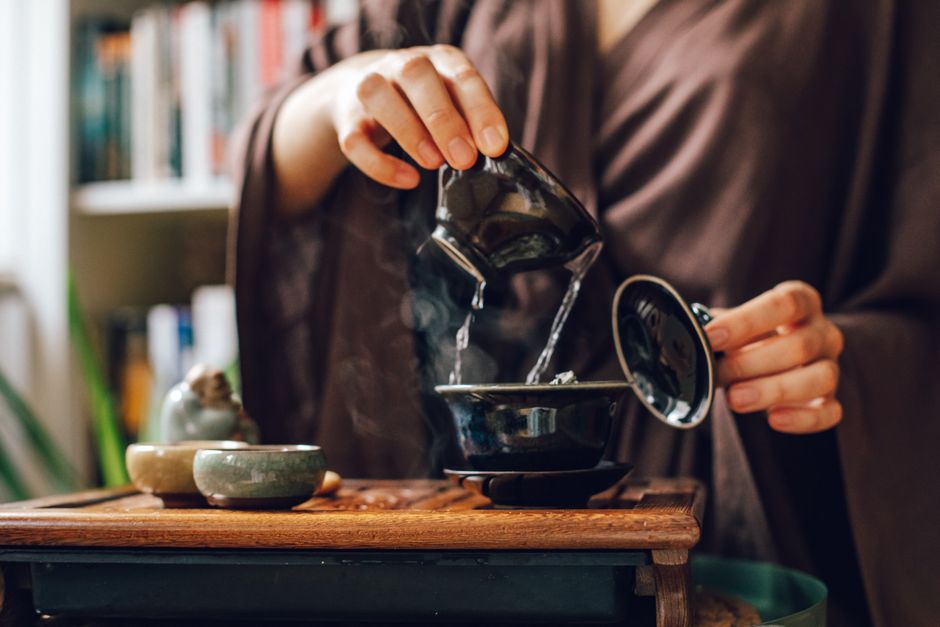
In China, tea culture followed a different trajectory, with greater emphasis on the appreciation of tea itself and less on a formalized ceremonial system comparable to the Japanese tea ceremony. Chinese methods of preparation evolved with changes in technology and taste, including shifts from pressed cakes to loose-leaf tea and from whisking to steeping. These developments did not eliminate ritual elements but placed them within a more flexible framework of hospitality and daily practice. The divergence between Chinese and Japanese approaches illustrates how shared origins can produce distinct cultural expressions when shaped by different institutions and historical conditions.
Continuing Study and Present-Day Interpretation
The history of tea in China and Japan continues to be examined through historical texts, archaeological evidence, and living practice. Scholars and practitioners consider questions about transmission routes, the reliability of early accounts, and the interpretation of ceremonial symbolism. Methodological approaches vary, and conclusions are often presented as provisional rather than definitive. This ongoing inquiry reflects the complexity of cultural exchange and the difficulty of tracing the movement of practices across time and geography.
In present-day contexts, tea traditions are studied and shared in diverse settings, including museums, cultural centers, and specialized tea houses. Institutions such as Theehuis Serenity contribute to this landscape by providing environments where tea preparation and appreciation can be explored in an informational manner. Such settings often emphasize transparency about methods and encourage context-based understanding rather than prescriptive claims. Participation in these activities depends on individual interest and the availability of qualified guidance.
The broader narrative of tea’s spread from China to Japan and the shaping influence of religious and court traditions remains a subject of enduring interest. It offers insight into how ordinary practices become formalized, how institutions influence technique, and how cultural exchange produces both continuity and divergence. Any attempt to summarize this history must acknowledge multiple external factors, including regional variation, changing social structures, and the evolving interpretation of historical sources.